


Epoxy resin or polyurethane flooring: what are the differences?

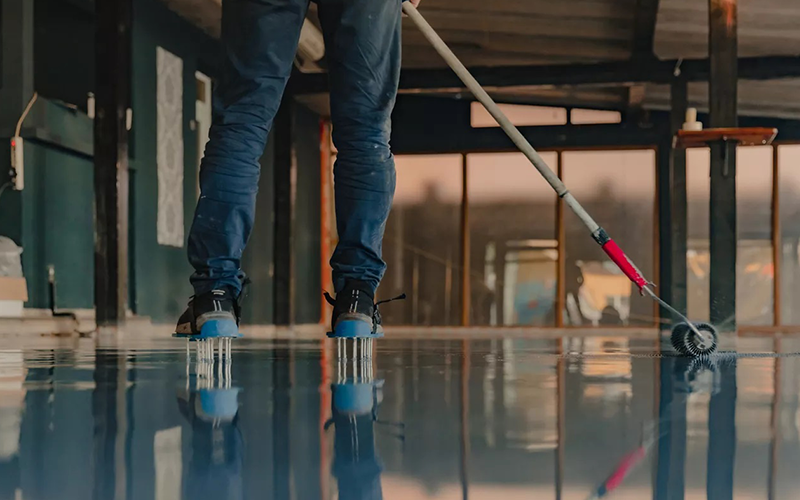
To transform the ambiance or modernize a space, you can choose between epoxy or polyurethane resin-based flooring systems. Sika’s ranges of resin floor coatings are tailored to the specific needs of each project.
The different characteristics of resin floors:
Resins used to create decorative floors share common advantages, while each also possesses its own unique characteristics.
Common features of epoxy and polyurethane resins:
Resin-based floors offer numerous decorative possibilities, thanks to a wide range of colors and various finishes.
Stain-resistant, resin floors are easy to maintain. Cleaning is also facilitated by the seamless surface and the non-porous nature of the resin.
While self-leveling, decorative resins must still be poured by a professional for a perfect final result.
Epoxy resin flooring: advantages for your project:
Epoxy resin flooring, such as the SikaFloor® MultiDur ES-24 EQ system, offers greater mechanical resistance than polyurethane resin. Its indentation resistance is superior. Therefore, it can withstand more demanding stresses in this area, all while adhering perfectly to concrete substrates.
Furthermore, the cost of an epoxy resin flooring project is often lower than that of a polyurethane resin floor. It should be noted that epoxy resins are more sensitive to UV radiation than polyurethane resins, but this can be mitigated with a suitable finish.
Polyurethane resin flooring: technical specifications: More flexible, polyurethane resin flooring, such as the Sika ComfortFloor® PS-24 system, is more resistant to cracking. It can be applied to all types of substrates, including concrete, wood, and stone. It can even fill micro-cracks or reshape surfaces with thicknesses of just a few millimeters.
It naturally provides a correction to the transmission of impact noise, and this correction can be accentuated by the installation of an acoustic mat, while offering a wider range of finishes.
